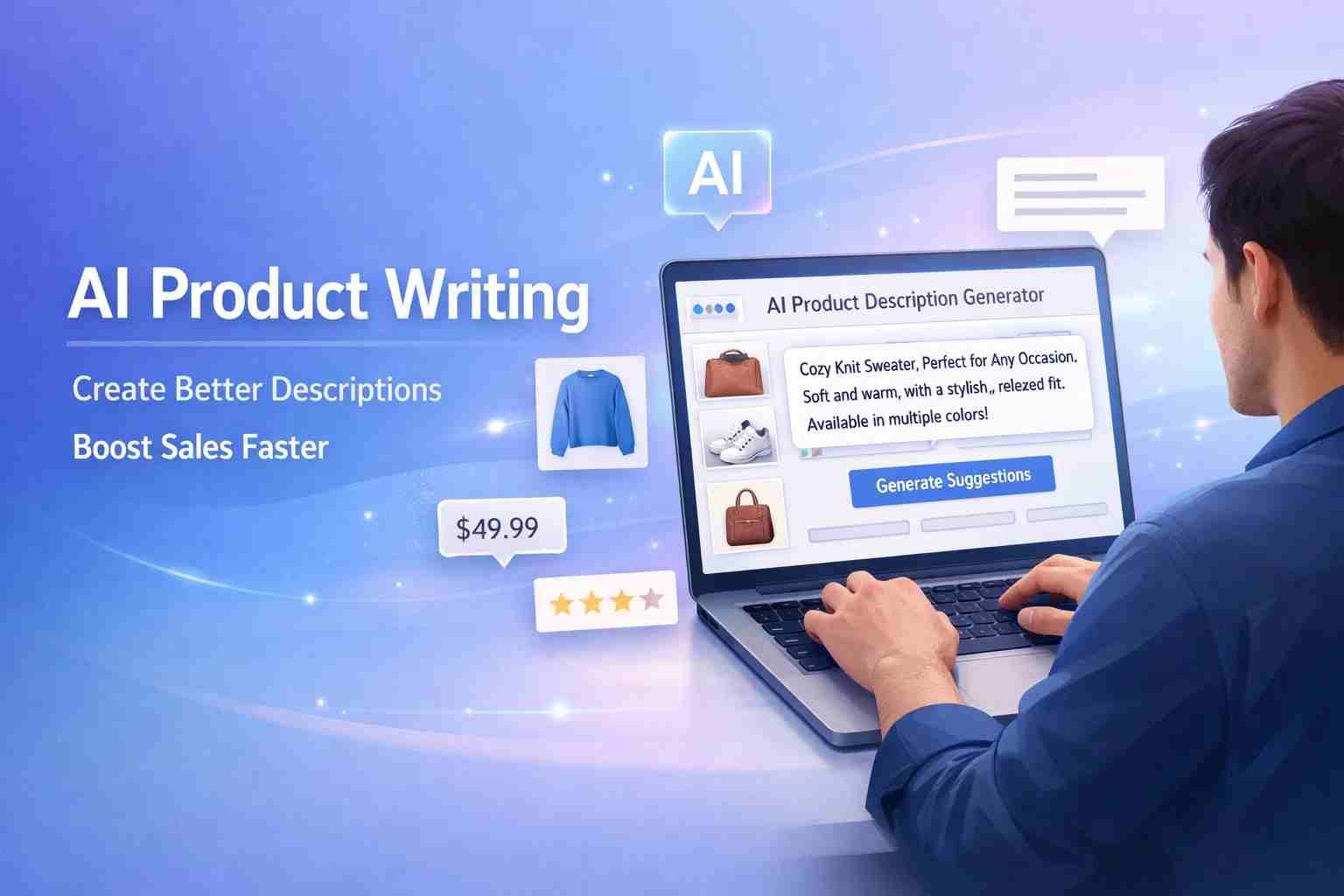
 If you’re trying to write product descriptions faster, here’s the short answer: yes, a product description AI generator can do most of the heavy work for you. But the real value comes when you guide it properly and tweak the output like a human. That’s where good results turn into great ones.
Let me explain how this actually works, what tools matter in 2026, and how you can get descriptions that don’t just sound good but actually help you sell.
What a product description actually does for your sales
A product description is not just text under your product. It’s the moment where a visitor decides whether to trust you or leave.
A strong product description does three things at the same time. It explains the product clearly, builds confidence, and gently pushes the reader toward buying. That’s why even small changes in wording can increase sales.
For example, saying “high-quality fabric shirt” is weak. But saying “soft, breathable cotton shirt that stays comfortable all day” feels real. That’s the difference between information and persuasion.
Now add SEO into this. Your description also helps Google understand your product. That means better chances of ranking in search results.
So yeah, writing these manually for 50 or 100 products gets exhausting. That’s exactly where AI steps in.
Why writing product descriptions feels harder than it should
Most people don’t struggle because they don’t know their product. They struggle because writing takes time and mental energy.
You sit there thinking:
What should I write?
How long should it be?
Which keywords should I add?
And after writing 5 descriptions, your brain just gives up.
For eCommerce store owners, this gets worse. You’re not writing one description. You’re writing dozens or hundreds.
That’s why AI tools became popular. Not because they are perfect, but because they remove that initial blank page problem.
How a product description AI generator really works
Here’s the simple version.
You give the AI some input. It could be:
product name
features
target audience
tone
The AI then predicts what a good product description should look like based on patterns it has learned from millions of examples.
Tools like ChatGPT, Jasper AI, Copy.ai, and Shopify Magic all work on this same idea. The difference is how easy they make it for you to control tone, style, and structure.
What’s interesting is this: the better your input, the better your output.
If you just write “men shirt,” you’ll get generic text.
If you write “men’s slim-fit cotton shirt, breathable, summer wear, casual style,” you’ll get something much stronger.
So which AI tools are actually worth using right now
There are a lot of tools out there, but honestly, only a few are worth your time.
ChatGPT
Best for flexibility. You can create custom prompts and control everything. Great for beginners and advanced users.
Jasper AI
More focused on marketing. It gives structured outputs and is good for brands that want consistent tone.
Copy.ai
Simple and fast. Good for quick product descriptions without too much setup.
Writesonic
Balanced option. Offers templates and decent SEO-friendly outputs.
Shopify Magic
If you run a Shopify store, this is the easiest option. It integrates directly into your product page.
Here’s the thing. The tool matters less than how you use it. A well-guided ChatGPT prompt can outperform most paid tools.
How to create a product description with AI that actually sells
Let’s keep this real and simple.
Start by giving clear product details. Not just the name. Add features, benefits, and target users.
Instead of saying:
“Wireless earbuds”
Try something like:
“Wireless earbuds with noise cancellation, long battery life, perfect for gym and travel”
Now tell the AI how you want it written.
Casual tone
Professional tone
Short description
Detailed description
Once you generate the output, don’t just copy and paste. Read it.
Adjust a few words. Add a human touch. Maybe include a real benefit or small detail that AI missed.
That small editing step is what separates average content from high-converting content.
The part most people mess up when using AI
Here’s where things go wrong.
People generate text and publish it as it is.
No editing. No personalization. No brand voice.
That’s why their descriptions feel robotic.
Another mistake is keyword stuffing. Adding too many keywords makes the text unnatural, and honestly, Google is smart enough to notice.
And then there’s tone. If your brand is friendly and casual, but your AI text sounds like a corporate report, it won’t connect with your audience.
AI is a tool, not a replacement. You still need to guide it.
Simple example to see how AI transforms a boring product description
Let’s take a basic example.
Before AI
“This is a water bottle. It is made of steel. It is good for daily use.”
After AI (with better input)
“Stay hydrated all day with this durable stainless steel water bottle. Designed to keep your drinks fresh and cool, it’s perfect for work, gym, or travel.”
See the difference?
The second one feels more natural. It speaks to the user. That’s what you want.
Can AI written product descriptions rank on Google
Yes, they can. But only if you use them the right way.
Google doesn’t care if content is written by AI or a human. It cares about quality.
If your description is helpful, clear, and relevant, it can rank.
But if it’s generic, repetitive, or copied across multiple products, it won’t perform well.
Here’s what works:
- Add slight human edits
- Use natural keywords
- Make each description unique
That’s enough to stay in the safe zone.
What I would personally do if I had to write 100 product descriptions today
I wouldn’t write them manually. That’s for sure.
I’d create a simple system.
First, prepare a template prompt. Something like:
“Write a friendly and engaging product description for [product name] with features [X], benefits [Y], target audience [Z].”
Then I’d generate descriptions in batches.
After that, I’d quickly edit each one. Not full rewriting. Just polishing.
Maybe change the first line. Add one unique detail. Adjust tone.
This way, I can finish 100 descriptions in a few hours instead of days.
At the end of the day, AI just removes the hard part. You still control the final result.
Once you get used to it, writing product descriptions stops feeling like work. It becomes more like editing ideas instead of creating them from scratch.

Alexandra Smith: All things tech, News, Social Media Guide, and gaming expert. Bringing you the latest insights and updates on Mobiledady.com