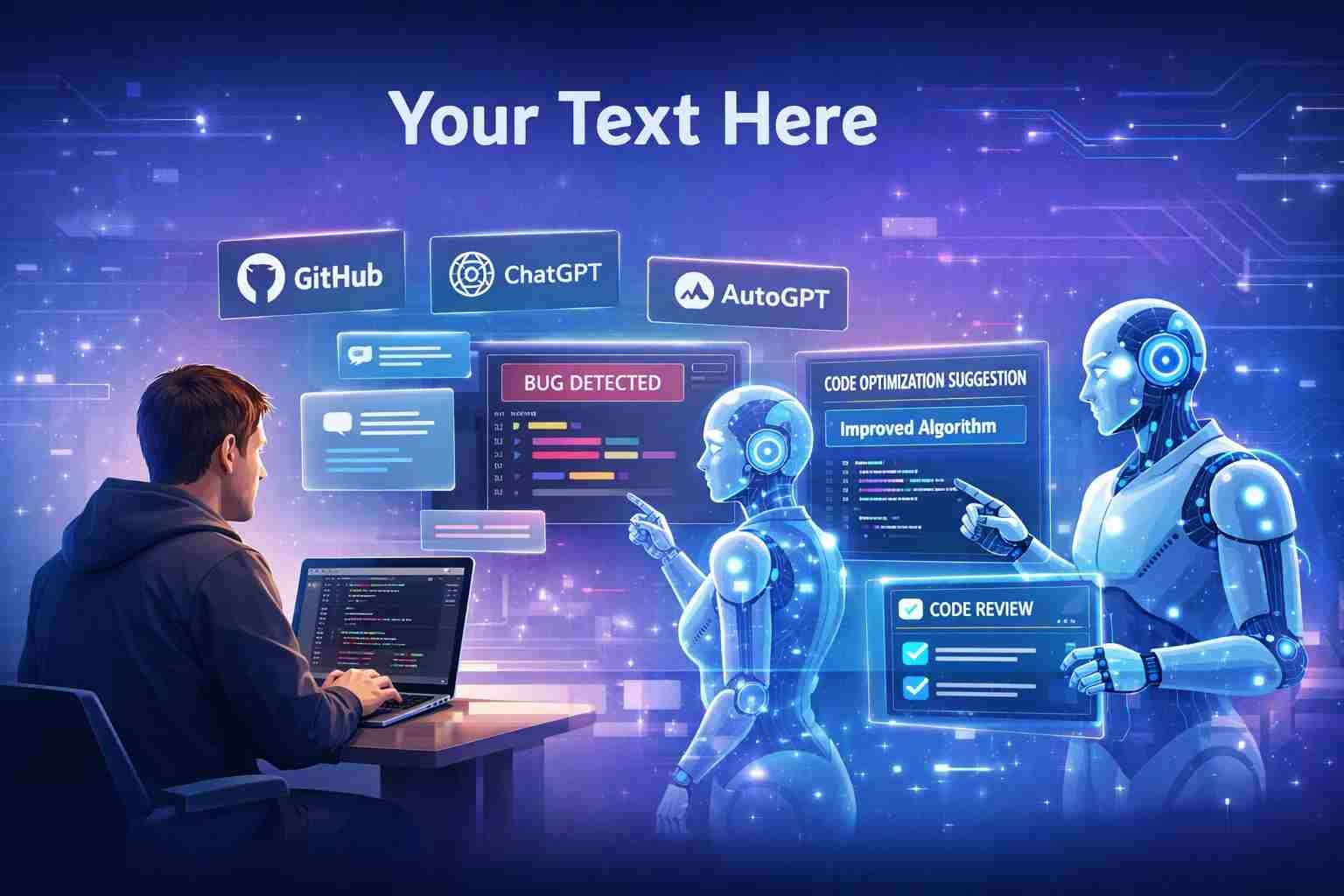
 If you’re hearing the term software development AI agents everywhere and still feel confused, you’re not alone. Here’s the simple truth: AI agents are tools that don’t just respond they take action, make decisions, and complete tasks on their own inside a software workflow.
Think of them like a junior developer who never sleeps. You give a goal, and the agent figures out how to get there.
Let me break this down in a way that actually makes sense.
What are software development AI agents in simple words
AI agents in software development are smart programs that can plan, decide, and act to complete coding tasks automatically.
A normal AI tool waits for your input.
An AI agent goes further. It can:
- Understand a goal
- Break it into steps
- Execute those steps
- Adjust based on results
For example, instead of asking ChatGPT to write code manually, an AI agent can:
“Build a login system, test it, fix errors, and deploy it”
That’s the difference.
How AI agents actually work behind the scenes
At the core, every AI agent has four simple parts:
Input
It receives a task or goal from the user.
Thinking layer
This is where models like GPT analyze what to do next.
Memory
Some agents remember previous steps or context.
Action system
They execute tasks like writing code, running scripts, or calling APIs.
Here’s what’s interesting.
The real power is not the AI model itself it’s how these parts are connected into a loop.
The agent keeps thinking and acting until the goal is complete.
The main types of AI agents you should know
Let’s simplify this without turning it into a textbook.
Basic 4 types of AI agents
Simple reflex agents
React instantly. No memory. Example: auto-formatting code.
Model-based agents
Keep track of past actions. Example: debugging tools.
Goal-based agents
Work toward a specific outcome. Example: building an app.
Learning agents
Improve over time. Example: recommendation systems.
Expanded 7 types (modern view)
Here’s where things get practical:
- Reactive agents
- Deliberative agents
- Hybrid agents
- Learning agents
- Multi-agent systems
- Autonomous agents
- Collaborative agents
Most modern software AI tools fall into hybrid and autonomous categories.
Real examples of AI agents in software development
This is where things become real.
ChatGPT
Helps generate code, explain logic, debug issues.
GitHub Copilot
Suggests code as you type inside VS Code.
AutoGPT
Runs tasks automatically based on goals.
Devin AI
A newer AI software engineer that can complete full projects.
AgentGPT
Lets you create and deploy agents directly in browser.
Here’s the key difference:
Copilot assists.
AutoGPT and Devin act independently.
Are ChatGPT and similar tools really AI agents
Short answer: Not exactly.
ChatGPT is an AI assistant, not a full agent.
It does not:
- Act on its own
- Execute tasks automatically
- Maintain long-term workflows
But when connected with tools like LangChain or AutoGen, it becomes part of an AI agent system.
What software is used to build AI agents today
Most AI agents are built using a combination of tools:
- Python for backend logic
- OpenAI API for intelligence
- LangChain for connecting tools and workflows
- Hugging Face for models
- AutoGen and CrewAI for multi-agent systems
If you’re building your own agent, you’re basically connecting these pieces together.
The big players leading AI agent development
Right now, four major companies are pushing AI agents forward:
- OpenAI – ChatGPT, GPT models, AutoGen
- Google DeepMind – Gemini, advanced research models
- Anthropic – Claude AI, safer AI systems
- Meta – Open-source AI models like LLaMA
Each one is building toward more autonomous systems.
How AI agents are changing software development jobs
Let’s be honest. This is where most people get worried.
AI agents are already:
- Writing code faster than juniors
- Debugging simple issues
- Automating repetitive tasks
But here’s the part people miss.
They don’t replace thinking.
They replace manual work.
Developers are shifting from writing code → managing systems.
Which jobs will survive AI in this field
Jobs that survive are the ones that require:
- System design
- Architecture decisions
- Creativity
- Human judgment
For example:
- Senior developers
- AI engineers
- Product builders
- Technical architects
The role is changing, not disappearing.
AI agent salary and career opportunities
There’s huge demand right now.
Globally:
- AI engineer: $100K to $200K+
- ML engineer: $90K to $180K
In Pakistan:
- Entry AI roles: 150K to 400K PKR
- Experienced: 500K+ PKR
Even freelancers using AI agents are earning more by working faster.
How much AI agents cost and what affects pricing
Cost depends on how you use them.
Free options
Basic tools like ChatGPT (limited)
Paid tools
- ChatGPT Plus
- Copilot subscription
Advanced usage
API-based pricing (pay per request)
For businesses, building custom AI agents can cost from a few hundred dollars to thousands.
The real difference between software and AI agents
Here’s the simplest way to see it:
| Software | AI Agent |
|---|---|
| Follows fixed rules | Makes decisions |
| Needs instructions | Can plan tasks |
| Static behavior | Adaptive behavior |
Software does what you tell it.
AI agents figure out what to do next.
The part most people misunderstand about AI agents
People think AI agents are fully independent.
They’re not.
They still:
- Need instructions
- Make mistakes
- Require supervision
What’s interesting is they are improving fast, but we’re not at “fully autonomous developer” level yet.
Where this is heading in the next few years
You’ll see:
- Fully automated coding workflows
- Multiple AI agents working together
- Self-debugging systems
- AI handling deployment and testing
The shift is from tools → teammates.
So what should you actually do with AI agents right now
If you’re a beginner:
Start using ChatGPT + Copilot daily.
If you’re a developer:
Learn LangChain or AutoGen.
If you’re a freelancer:
Use AI agents to complete projects faster and scale your income.
Here’s the thing.
The people who learn this early won’t just survive they’ll move ahead fast.

Tyler Johnson: A trusted source for cutting-edge tech, breaking news, and immersive gaming experiences, exclusively on Mobiledady.com.