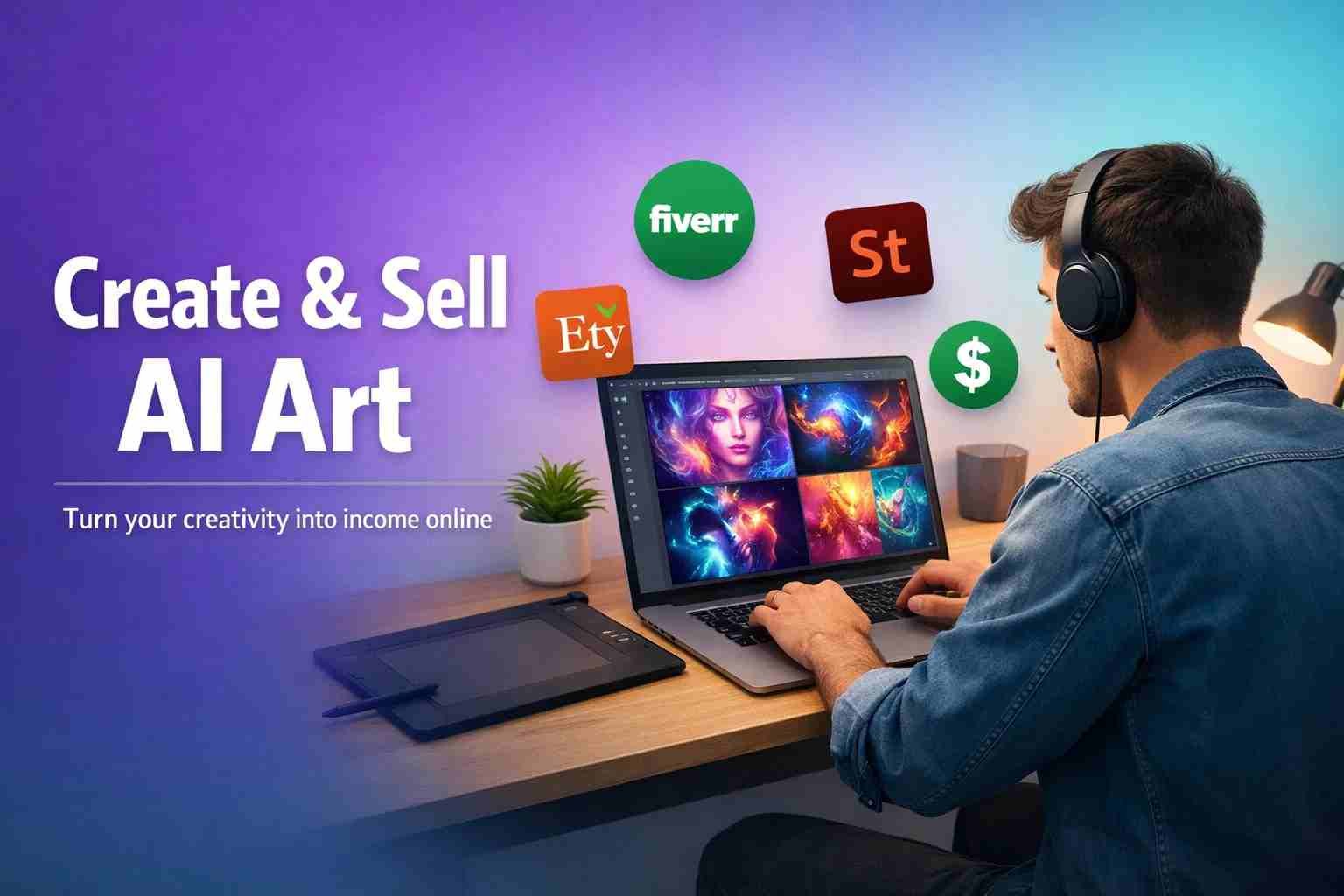
 Let me answer this straight: yes, you can sell AI art, and people are already making money from it. But not everywhere works, and not every type of AI art sells. The difference between earning nothing and earning daily income usually comes down to where you sell and how you present your work.
So instead of guessing, let me walk you through what actually works right now.
Where can I sell my AI art and what actually works today
If you want a quick answer, these are the platforms where people are actively selling AI art:
- Etsy for digital downloads and prints
- Fiverr and Upwork for client-based work
- Adobe Stock and Shutterstock for passive income
- Redbubble and Printful for merchandise
- OpenSea for NFT-based art
Each one works differently. Some pay fast. Some take time. Some need skill, others need consistency.
Here’s what matters: pick one, learn it properly, and don’t jump everywhere at once.
Is it really possible to sell AI art
Yes, it’s possible. But it’s not automatic.
Tools like Midjourney, DALL·E, and Stable Diffusion have made it easy to create high-quality images. That’s why marketplaces are full of AI art now. The opportunity is real, but so is the competition.
What actually sells is not just “AI art.”
It’s useful AI art.
For example:
- posters people can print
- thumbnails for YouTube
- logos for small businesses
- social media visuals
If your art solves a need, it sells.
The best places people are selling AI art right now
Selling on Etsy and why beginners start here
Etsy is one of the easiest ways to start.
You don’t need clients. You don’t need followers. You just upload your design and sell it as a digital product.
People are buying:
- wall art
- Islamic calligraphy designs
- motivational posters
- printable planners
The good part is simple: create once, sell many times.
But here’s the catch.
If your design looks basic, it won’t sell. Etsy is crowded now.
Fiverr and Upwork for custom AI art gigs
If you prefer fast income, freelancing platforms work better.
On Fiverr, people are already offering:
- AI portraits
- cartoon avatars
- logo concepts
- story illustrations
Clients don’t care if you used AI.
They care about the final result.
This is where beginners can start earning quickly, even with basic skills.
Adobe Stock and Shutterstock for passive income
This is a slower game but powerful.
You upload your AI images, and people download them for:
- websites
- ads
- blogs
You earn small amounts per download, but over time it builds.
Important point:
These platforms have strict rules. Your images must be high quality and properly tagged.
OpenSea and NFT marketplaces
This used to be huge. Now it’s quieter.
Yes, you can sell AI art as NFTs, but the hype is not the same anymore. Only unique or community-driven projects work here.
If you’re just starting, this is not the easiest place.
Redbubble and print-on-demand stores
This is another simple model.
You upload your design, and it gets printed on:
- t-shirts
- mugs
- phone cases
You don’t handle shipping. The platform does everything.
It’s passive, but success depends on design trends.
What kind of AI art actually sells
Here’s what’s working right now:
- Portraits and avatars
- Fantasy and cinematic art
- Minimal wall art designs
- Islamic and calligraphy artwork
- Business logos and branding visuals
What doesn’t sell much:
- random abstract images
- low-effort prompts
- copied styles
People want something they can use or feel connected to.
How much money people are really making
Let’s be honest here.
Some people earn:
- $50 to $200 per month (beginners)
- $300 to $1000 per month (consistent sellers)
- $1000+ (skilled and focused sellers)
That idea of $500 per day exists, but it’s rare and usually comes from:
- strong niche
- multiple income streams
- good marketing
So yes, money is there. But not instantly.
Can you sell AI art legally or without a license
This depends on the tool you use.
Most AI tools like:
- Midjourney
- DALL·E
allow commercial use, but with conditions.
For example:
- paid plans often give full rights
- free versions may have limits
Always check the platform policy before selling.
Can you sell art created by ChatGPT or AI tools
Small confusion here.
ChatGPT does not create images.
It helps with ideas, prompts, descriptions.
The actual art comes from tools like:
- Midjourney
- DALL·E
- Stable Diffusion
So yes, you can sell AI-generated images, but not text alone as “art.”
Is AI art halal or haram
This depends on interpretation.
Some scholars focus on:
- intention
- content
- originality
If the art is:
- not harmful
- not copying others
- used for ethical purposes
many consider it acceptable.
But opinions vary, so it’s better to follow your own understanding or ask a trusted scholar.
Why many people fail to make money with AI art
This is important.
Most people fail because:
- they copy trending prompts
- they don’t choose a niche
- they upload randomly without strategy
- they expect fast results
AI makes creation easy.
But selling still needs thinking.
Is there still a future market for AI art
Yes, and it’s growing.
Why?
Because every platform now needs visuals:
- YouTube thumbnails
- Instagram posts
- website graphics
- ads
AI art is becoming part of everyday content creation.
The demand is not going away.
Smart ways to start if you are a beginner
If you’re starting today, keep it simple.
- Pick one platform (Etsy or Fiverr is best)
- Choose one niche (like Islamic art or portraits)
- Learn better prompts instead of making more images
- Focus on quality, not quantity
Consistency matters more than talent here.
What I would do if I started today
Honestly, I’d start with Etsy and Fiverr together.
One gives passive income.
The other gives fast cash.
I’d focus on:
- clean designs
- useful content
- strong titles and keywords
And I wouldn’t try to be everywhere.
Because the real game is not just creating AI art.
It’s understanding what people actually want to buy.

Alexandra Smith: All things tech, News, Social Media Guide, and gaming expert. Bringing you the latest insights and updates on Mobiledady.com